
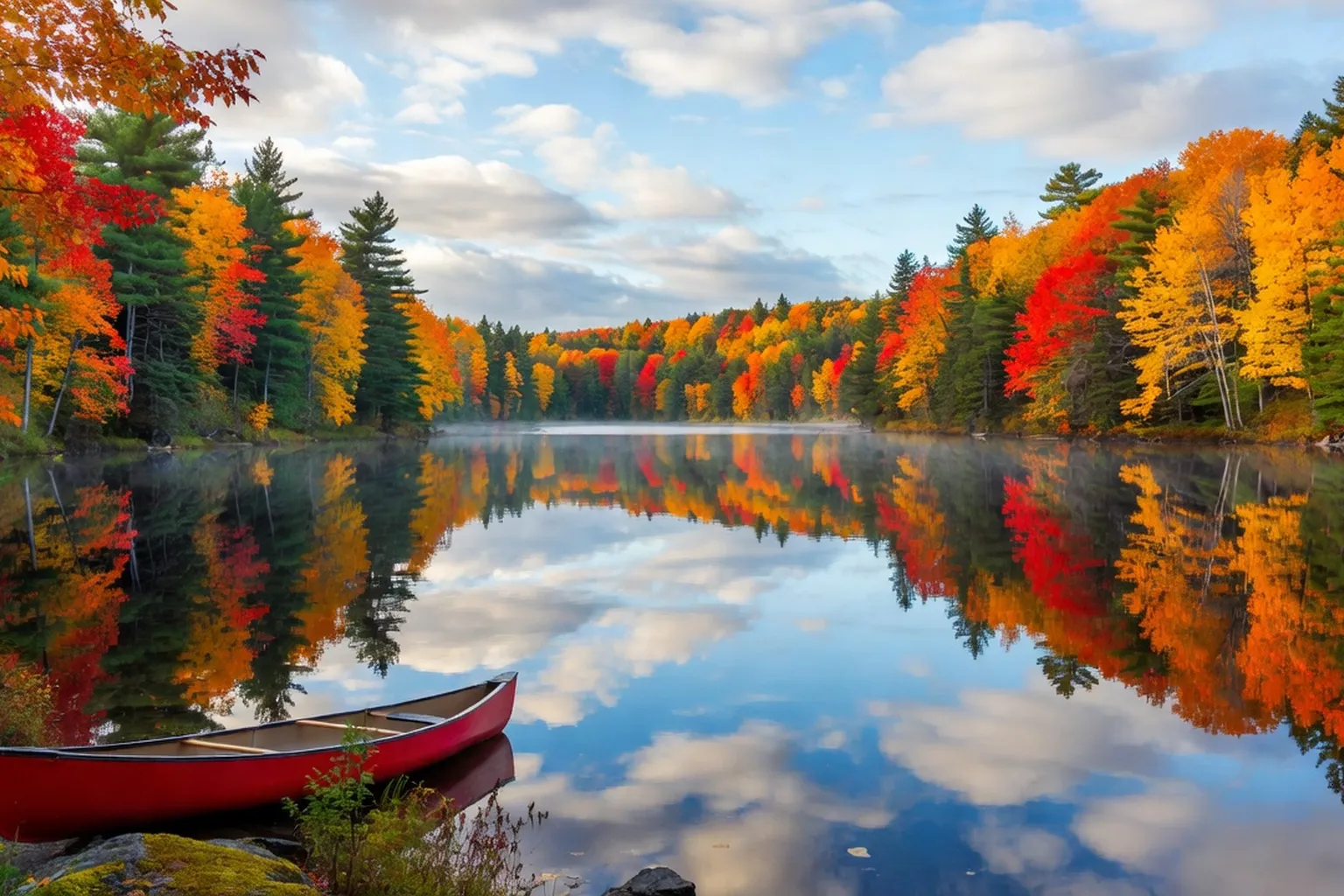
Mauricie holds a unique place in Quebec’s tourism geography. Wedged between the Laurentians to the west and the Saguenay region to the north, crossed from south to north by the Saint-Maurice River that gave it its name, the region stretches across 35,000 km² from the banks of the St. Lawrence River to the edge of the boreal forest. For anyone looking to rent a cottage in 2026 without enduring the tourist crowds of Tremblant or Mont-Sainte-Anne, Mauricie remains one of Quebec’s last great secrets.
This guide explores three main gateways—the Mauricie National Park, the Grandes-Piles and Upper Mauricie area, and the Shawinigan–Trois-Rivières urban corridor—to identify the cottage profile suited to your plans. If you are still hesitating between Mauricie and other regions of Quebec, also see our comparative feature on the 4 regions where you can rent a cottage in Quebec.
Why Mauricie in 2026?
Three characteristics set Mauricie apart in 2026. First, its accessibility: 90 minutes north of Montreal via Highway 40 (to Trois-Rivières), then another 30 to 45 minutes to reach the natural areas, the region offers the second-best “driving time / change of scenery” ratio in the province, just behind the northern Laurentians. Next, its natural density: with more than 15,000 lakes across its territory, Mauricie has one of the highest concentrations of waterways in inhabited Quebec. Finally, its industrial and cultural heritage: Shawinigan pioneered aluminum production in Quebec, Grand-Mère and La Tuque fuelled the great forestry adventure, and Upper Mauricie remains the ancestral territory of the Atikamekw.
The year 2026 marks a milestone for the region: the National Park is celebrating its 55th anniversary (inaugurated in 1971), several forestry villages—Grandes-Piles foremost among them—have renewed their tourism offerings, and new ecotourism outfitters are opening in Upper Mauricie. For visitors, this means a combination of still-reasonable prices (Mauricie remains 20 to 35% less expensive than the Laurentians for an equivalent cottage), genuine availability even in high season (provided you do not wait until the last minute), and preserved cultural authenticity.
Mauricie National Park: the grand gateway
Mauricie National Park, managed by Parks Canada, covers 536 km² in the heart of the southern Laurentians. Its emblem—Lake Wapizagonke and its granite canyons—features in the memories of every generation of Quebecers who took a school or family trip there in the 1970-1990 period. It is one of Quebec’s three federal national parks (along with Forillon in the Gaspé Peninsula and Mingan on the North Shore), with protected biodiversity and a structured adventure setting.
The two access gateways
The National Park has two official entrances:
-
The Saint-Mathieu-du-Parc entrance (south side, from Saint-Tite and Trois-Rivières) is the busiest. It serves the large-lake area (Wapizagonke, Anticagamac, à la Pêche), with the main services: visitor centre, beaches, watercraft rentals, and dining. For cottage renters, this is the most convenient option.
-
The Saint-Jean-des-Piles entrance (east side, from Shawinigan) serves the Caron area and the wilder northern part of the park. It is the preferred entrance for winter cross-country skiing and for hikers seeking fewer crowds.
The right cottage profile
Cottages near the Park are located mainly in Saint-Mathieu-du-Parc (south side), Saint-Jean-des-Piles (east side), and neighbouring villages (Saint-Élie-de-Caxton, Saint-Roch-de-Mékinac). Three main profiles dominate:
- The family lakeside cottage (4-8 people, in the lake communities around Saint-Mathieu-du-Parc)—high-season rates of $280-550.
- The rustic forest cottage (4-6 people, isolated properties outside organized resort areas)—rates of $180-350.
- The luxury waterfront cottage (8-14 people, with Nordic spa, watercraft included, expansive view)—rates of $600-1,100 in high season.
For families with children, I consistently recommend the Saint-Mathieu-du-Parc area: services are close at hand, the park’s activity program works well, and the lakeshores are safe.
Grandes-Piles and Upper Mauricie: the inhabited forest
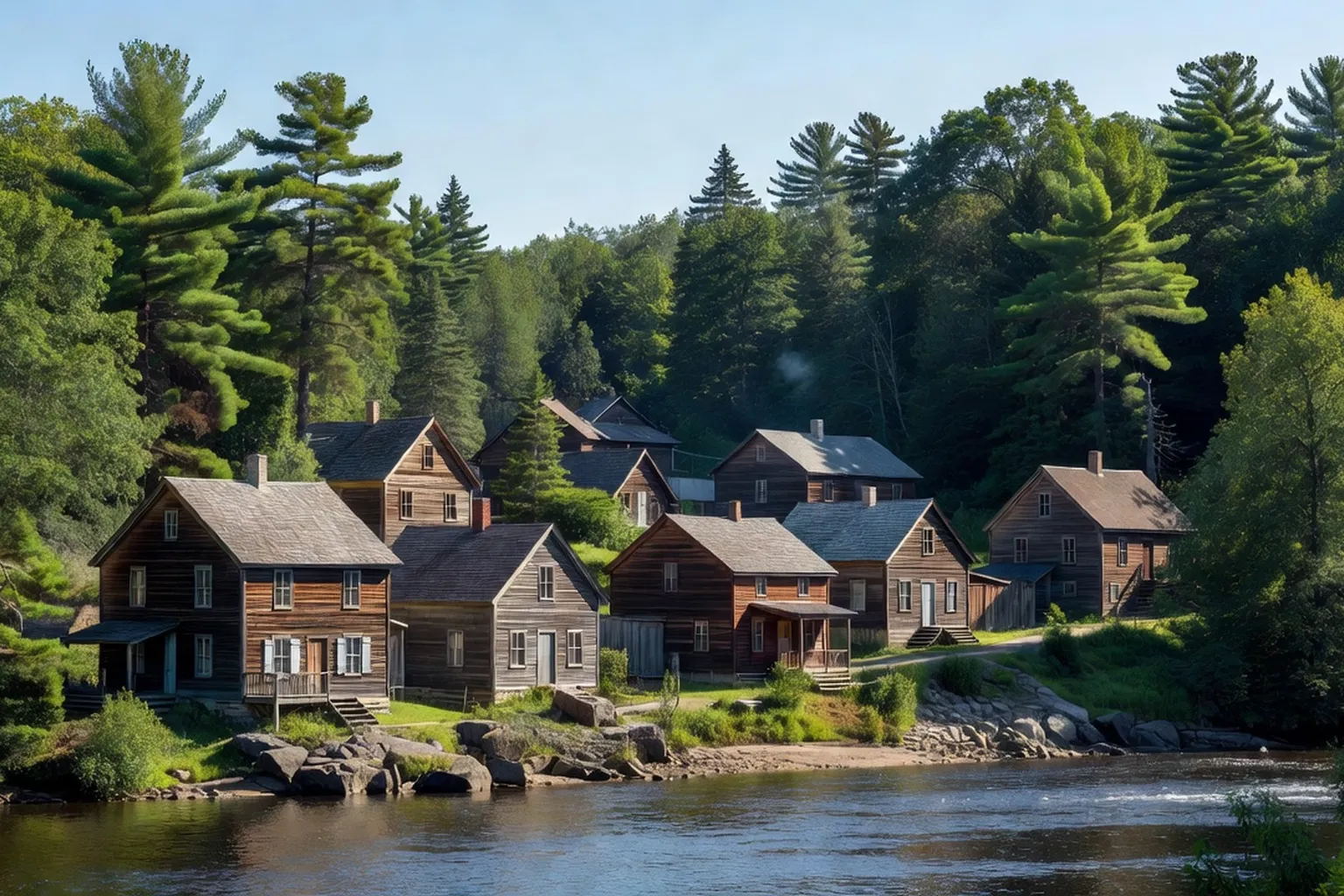
Grandes-Piles is one of the province’s most beautiful villages. Perched on a plateau overlooking the Saint-Maurice River, it has preserved its early-20th-century forestry architecture: squared-pine houses, converted barn-stables, and narrow lanes. It is the ideal starting point for anyone wanting to explore Upper Mauricie without venturing deep into the vast, dark forest.
The uniqueness of Grandes-Piles
The village has an exceptional living heritage site: the Village du Bûcheron, an ecomuseum dedicated to Upper Mauricie’s forestry adventure, recreates a 1920-1940 lumberjack camp with its original buildings. It is one of the most memorable educational visits in rural Quebec for anyone seeking to understand the material culture of the boreal forest.
Beyond the village, Upper Mauricie extends toward Saint-Roch-de-Mékinac, La Tuque (capital of the forestry region), and farther on toward the Gouin Reservoir and the Far North. Cottages in this area are mainly of two types:
- Family lakeside cottages in the resort developments around Lake Mékinac and Lac à la Tortue—rates of $160-340 per night.
- Outfitter cottages in more remote locations, often accessible by forestry road, with access to exclusive bodies of water—rates of $220-450 per night, with watercraft and permits often included.
For anyone wishing to explore the fishing aspect in greater depth, our feature on fishing cottages in Quebec examines the province’s best spots in detail, including several in Upper Mauricie. The region also shares affinities with the cottage culture maintained in other northern territories—on this subject, see the Soleica blog devoted to the Far North and Nunavik, which documents boreal traditions and territory.
Shawinigan and the urban corridor: industrial heritage
Shawinigan, a city of 49,000 inhabitants, is Mauricie’s main urban hub. For many visitors, it is also an overlooked gateway: the city offers exceptional industrial heritage, a vibrant cultural scene for its size, and quick access to the surrounding natural areas.
La Cité de l’énergie
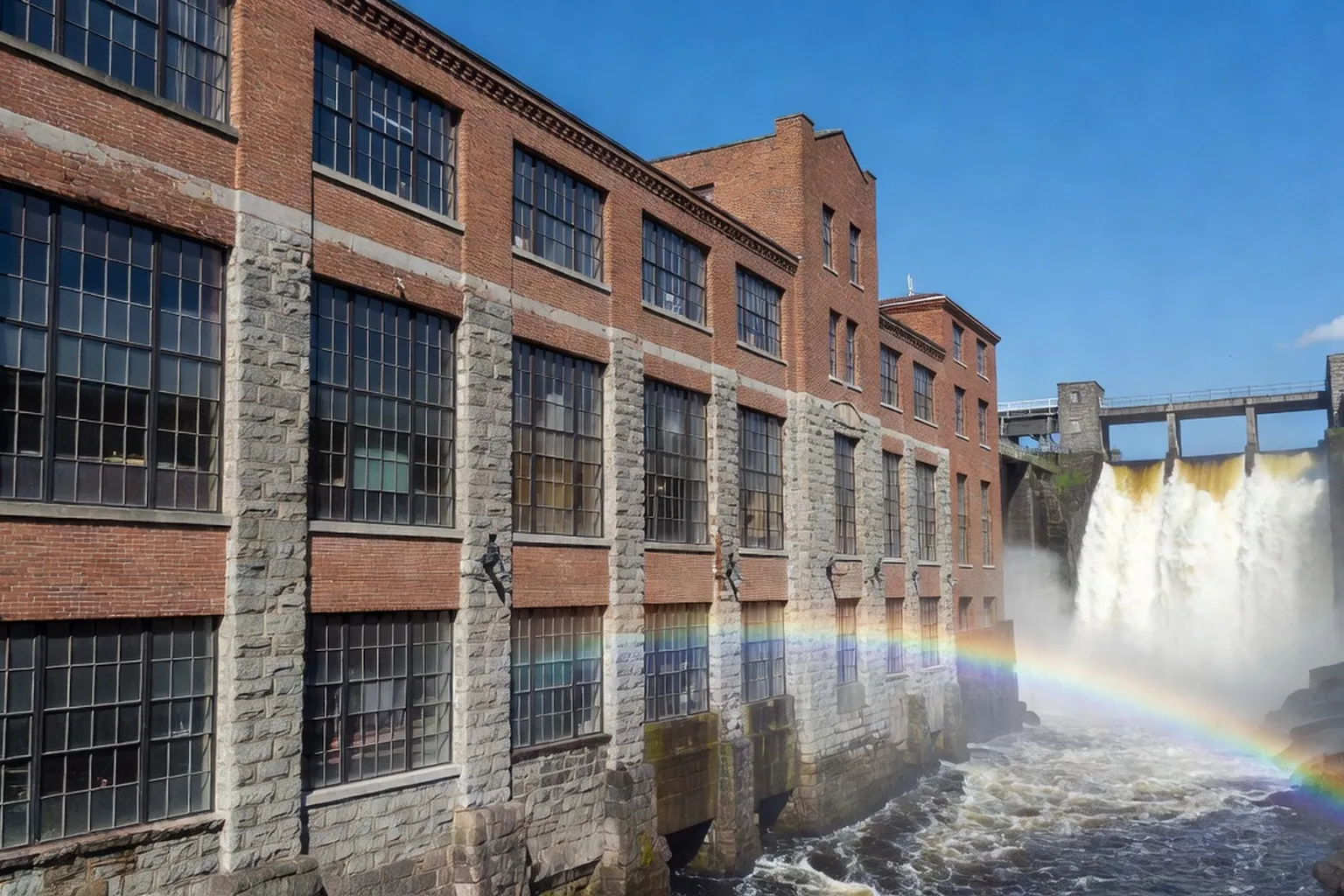
Shawinigan’s flagship site is La Cité de l’énergie: a former hydroelectric complex converted into an open-air museum, it combines a tour of the historic dam, a panorama from the observation tower, multimedia shows, and an exhibition on Quebec’s industrial adventure. It is one of the region’s must-see attractions.
The Saint-Maurice River crosses Shawinigan, forming the famous Shawinigan Falls (32 metres high), which powered Canada’s first hydroelectric generating station in 1899. The entire industrial heritage site—former aluminum plant, paper mills—is featured along an interpretive trail that rivals the best sites of its kind in North America.
Cottages along the Shawinigan–Trois-Rivières corridor
For anyone wanting to combine urban proximity with access to nature, the Shawinigan–Trois-Rivières corridor offers appealing options:
- Cottages along the Saint-Maurice River, between Shawinigan and Trois-Rivières—rates of $180-400 per night, ideal for anyone wanting a natural setting without being isolated.
- Cottages in Saint-Étienne-des-Grès (between Trois-Rivières and the National Park)—rates of $160-300 per night, strategically located for exploring the area.
- Cottages on the shores of Lake Saint-Pierre (toward Maskinongé)—rates of $200-450 per night, ideal for walleye fishing enthusiasts on this immense natural reservoir of the St. Lawrence.
To explore the options for lakeside cottages in Quebec more broadly, Soleica offers a detailed comparison that includes several Mauricie areas.
Four-season activities: a complete cycle
Mauricie can be experienced in every season, each revealing a different dimension of the territory.
In winter (December to March): cross-country skiing and snowshoeing in the National Park (Saint-Jean-des-Piles entrance), fat biking on maintained trails, snowmobiling (1,500 km of Trans-Québec trails in the region), dog sledding in Saint-Mathieu-du-Parc, ice fishing for walleye on the Saint-Maurice River or inland lakes.
In spring (April-May): snow goose watching along the shores of Lake Saint-Pierre (major migration from March-April), sugar shacks along the inland country roads (Mauricie has more than 40 commercial sugar bushes), kayaking on the first open waters, and hiking on low-altitude trails.
In summer (June to August): kayaking and canoeing in the National Park (the Wapizagonke canyons are legendary), fishing for walleye and pike in dozens of lakes, mountain biking in Upper Mauricie, festivals (Trois-Rivières International Poetry Festival in September, Saint-Tite Western Festival in early September).
In fall (September to mid-October): spectacular colours in the National Park (the Les Cascades trail is one of Quebec’s most photographed at this time of year), moose hunting in zone 26, hiking in ideal temperatures, and tasting local products along the regional Route des saveurs.
Average 2026 prices by area
| Area | Low season (Nov., May) | Mid-season (June, Sept.) | High season (July-August, Dec.-Feb.) |
|---|---|---|---|
| Saint-Mathieu-du-Parc | $180-280 | $260-400 | $380-650 |
| Saint-Jean-des-Piles | $160-260 | $240-380 | $350-580 |
| Grandes-Piles / Saint-Élie-de-Caxton | $130-220 | $200-320 | $280-500 |
| Upper Mauricie (toward La Tuque) | $150-250 | $220-380 | $320-550 |
| Shawinigan-Saint-Maurice | $140-240 | $200-340 | $280-460 |
| Lake Saint-Pierre | $160-280 | $240-380 | $320-520 |
Indicative rates for cottages accommodating 4-6 people, excluding cleaning fees ($50-120) and taxes (5% GST + 9.975% QST + 3.5% lodging tax).
Five tips for booking wisely
First tip: decide early whether you are looking for the Park or an outfitter. These are two different approaches to tourism. The National Park requires a structured approach (site reservations, marked trails, wildlife coexistence rules); an outfitter offers greater freedom but requires personal equipment and more self-sufficiency. For families, the Park is more suitable; for fishing enthusiasts, outfitters are unrivalled.
Second tip: check winter access. Many cottages in Upper Mauricie are served by forestry roads where snow clearing is inconsistent. Ask explicitly how often the road is cleared, and plan on a suitable vehicle (4×4 or very high-performance tires) for the most isolated cottages.
Third tip: plan ahead for fishing. If fishing is your goal, focus on outfitters with exclusive rights or well-managed ZECs. The Gouin Reservoir remains a benchmark for walleye and pike, but access should be planned 2 to 3 months in advance for the best periods.
Fourth tip: do not overlook Trois-Rivières. Many visitors pass through Trois-Rivières without stopping. That is a mistake: the city offers architectural heritage (old Trois-Rivières), a growing culinary scene, and seasonal whale-watching cruise departures on Lake Saint-Pierre. Set aside one day for the city.
Fifth tip: combine it with other regions. Mauricie is ideal as a stop on a broader itinerary: Mauricie → Charlevoix → Saguenay to the north, or Mauricie → Eastern Townships to the south. For anyone planning a multi-region stay, see our feature on the 4 regions of Quebec where you can rent a cottage, which details the natural connections between territories. For complete regional tourism information, the official Tourisme Mauricie website is a useful complementary reference for regional attractions, accommodations, and seasonal calendars.
FAQ
What is the best area of Mauricie for a first stay?
To discover the region, the Saint-Mathieu-du-Parc area (the National Park’s southern gateway) offers the best balance: direct access to the park, nearby restaurants, and a varied selection of cottages. For a more contemplative stay, Grandes-Piles or Saint-Élie-de-Caxton are better suited.
How much does a cottage in Mauricie cost in 2026?
For a cottage accommodating 4-6 people: $130 to $250 per night in low season, $200 to $400 in mid-season, and $350 to $700 in high season. Lakeside cottages in Saint-Mathieu-du-Parc can exceed $800 per night in high season.
Can you visit Mauricie National Park in winter?
Yes, the park remains open. The main through road (63 km) closes, but the Saint-Jean-des-Piles and Saint-Mathieu-du-Parc areas offer cross-country skiing, snowshoeing, fat biking, dog sledding, and wildlife watching.
Is Mauricie accessible without a car?
With difficulty. Trois-Rivières is served by bus from Montreal and Quebec City, but the National Park, forestry villages, and cottages are mainly accessible by car.
What are the best lakes for fishing in Mauricie?
The Gouin Reservoir for walleye and pike, Lake Mékinac for brook trout, Lac à la Pêche in the National Park for rainbow trout, and the Saint-Maurice River for walleye and bass.
Conclusion
In 2026, Mauricie will remain one of the most balanced choices for anyone seeking northern tranquillity without giving up urban proximity. Saint-Mathieu-du-Parc for a first family visit, Grandes-Piles for those who love historic forestry villages, Shawinigan for those who want to combine nature and industrial heritage—the region offers a diversity that few Quebec territories bring together within such a small radius. For practical guidance throughout your stay, consult our guide Four-season cottages in Quebec—it usefully complements considerations specific to Mauricie by covering equipment, winter standards, and best practices for use.